Brain Tumour
Hearing the words brain tumor can feel very overwhelming. It’s natural for your mind to jump to fear confusion and countless questions. But the reality is brain tumors are treatable and with the right care you can go on to live a healthy , fulfilling life. What matters the most is early diagnosis and the right treatment plan with the best neurosurgeon in Surat. Our approach is simple. We combine advanced medical expertise with the human touch. From the moment you walk in our goal is to help you feel informed and confident about your next steps.
Where Medical Expertise Meets Human Care
Brain tumor treatment is one of the most delicate years of medicine. It requires experience and careful decision making. But beyond all the technology and procedures what truly makes a difference is how care is delivered. Your hunt for the best neurosurgeon near me gets over with us. We use modern tools like high resolution imaging and neuro navigation systems besides minimally invasive surgical techniques to ensure safe and accurate treatment.
When it comes to brain tumours, our goal is always twofold. We aim for the maximum safe removal of the tumour while preserving the neurological function that defines your identity, independence, and quality of life. We never compromise brain function. Every decision is guided by precision, safety, and the belief that treatment should not only remove disease but also protect the person behind it.
Precision-Driven Brain Tumour Surgery
Brain tumour surgery demands more than removal alone. It requires an approach that balances oncological clearance with the preservation of speech, movement, sensation, and cognition. That is why every surgery is planned with extreme care, using advanced neurosurgical technology to navigate complex brain anatomy with the highest possible level of safety.
Our Technological Approach
Neuronavigation
You can think of this like a GPS system for the brain. It helps us plan the safest path and stay precise during surgery. It provides real-time guidance and allows millimeter-level accuracy during surgical planning and tumour approach.
CUSA (Ultrasonic Technology)
This allows us to gently break down and remove tumour tissue while protecting nearby nerves and blood vessels. It helps fragment and aspirate tumour tissue with precision while sparing vital surrounding structures.
Intraoperative Neuromonitoring (IONM)
During surgery, we continuously monitor important brain signals to make sure functions like movement and speech are safe. This helps ensure that critical pathways such as motor, sensory, and speech functions remain protected throughout the procedure.
Tumor Fluorescence
Special dyes help us clearly see tumour tissue so we can separate it from healthy areas more accurately. This improves distinction between tumour cells and normal brain tissue during surgery.
Intraoperative Ultrasound
Real-time imaging during surgery helps us confirm how much of the tumour has been removed. It also helps us assess the surrounding anatomy and vascular structures during the procedure.
Awake Craniotomy (when required)
In some cases, patients are awake during surgery so we can test speech and movement in real time — this helps us protect critical brain functions. This technique is especially valuable when tumours are located close to areas that control language or motor activity.
What is a Brain Tumor?
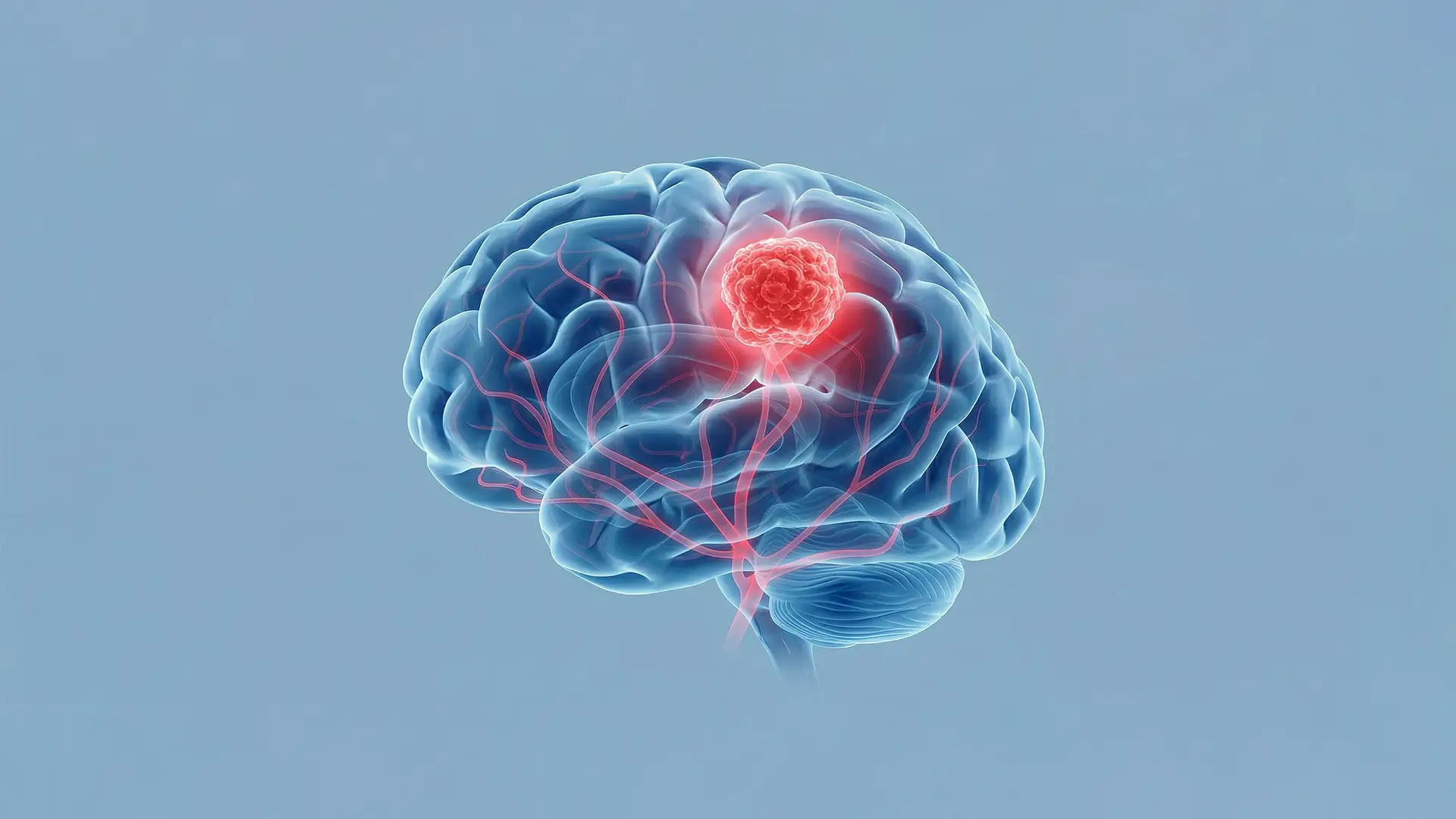
A brain tumor is an abnormal growth of cells inside the brain or surrounding areas. These growths can be non cancerous or cancerous. Benign tumors usually grow slowly and might not spread but they can still cause problems depending on the size and location. Malignant tumors tend to grow faster and might require more aggressive treatment. It’s important for you to understand that not all brain tumors behave the same way.
Common Symptoms of Brain tumor You Should Not Ignore
Brain tumors do not always show clear signs in the early stages according to the best brain tumor surgeon in Surat.
Some symptoms to watch for include:
Frequent or severe headaches, especially in the morning
Nausea or vomiting without a clear reason
Blurred or double vision
Difficulty speaking or understanding
Weakness or numbness in the arms or legs
Balance problems or dizziness
Seizures
Changes in memory, personality, or behaviour
When do you need Treatment for Brain Tumor?
Not every brain tumor needs brain tumour surgery in Surat . The treatment depends on several factors like the type of tumor, the size and location of your overall health.
Surgery: Often the first step if the tumor can be safely removed. The goal is to remove as much of the tumor as possible while protecting important brain functions.
Radiation Therapy: it uses high-energy beams to destroy tumor cells, often used after surgery or when surgery is not possible.
Chemotherapy: It uses medicines to slow or stop your tumor growth and may be used alone or with other treatments.
Targeted Therapy / Immunotherapy: In some cases, newer treatments may be recommended based on tumor type.
Monitoring: If the tumor is small and not causing symptoms, regular observation may be advised.
Every treatment plan is carefully personalised to ensure the safest and most effective outcome for you.
What happens during Diagnosis of Brain Tumor?
We understand this stage is completely stressful but knowing what to expect can help you feel more prepared. Once we have all the information we can sit down with you and explain everything clearly.
Your evaluation may include:
A detailed consultation and neurological examination
Imaging tests like MRI or CT scan
Advanced scans to understand tumour activity
Biopsy (in some cases) to determine the exact type
What are the Treatment options for Brain Tumor?
There is no single approach that works for everyone according to brain tumour specialists in Surat. Surgery is one of the first steps. It is especially important if the tumor can be safely removed. The goal is to remove as much of the tumor as possible while protecting important brain functions. Radiation therapy uses high energy beams to target and destroy the tumor cells. It is often used after surgery or when surgery is not possible. Chemotherapy uses medications to stop or slow the growth of tumor cells. It might be Used alone or in combination with other treatments. In some cases newer treatments like targeted therapy or immunotherapy might be recommended.
Clinical Excellence & Outcomes
Our approach has consistently delivered world-class results in high-risk and complex cases. We do not accept “inoperable” as a final word without careful evaluation. With precision-driven planning, advanced neurosurgical support, and a strong focus on preserving neurological function, we have successfully performed complete tumour excisions without neurological deficits even in extremely challenging cases, including:
- High-grade thalamic Glioblastoma (GBM)
• Brainstem exophytic GBM
• Giant medulloblastomas and astrocytomas in children as young as 2 and 3 years old
Our results demonstrate that “inoperable” is not a limitation we accept. With precision-driven techniques and expert planning, we have successfully performed complete tumor excisions without neurological deficits, even in highly complex cases, including:
• High-grade thalamic Glioblastoma (GBM)
• Brainstem exophytic GBM
• Giant medulloblastomas and astrocytomas in children as young as 2–3 years
What is Recovery like for Brain Tumor?
Recovery is different for every patient. It all depends on the tumor and the brain tumour treatment in Surat used. After treatment you might experience a short hospital stay, gradual improvement in symptoms and physical or neurological rehabilitation as required. You might recover quickly while others might even take more time. What’s important is that you are supported throughout the process.
Are all brain tumors cancerous?
Not many brain tumors are non-cancerous. But they still can affect brain function.
Is brain tumor surgery risky?
Like any surgery there are some risks. But with modern techniques and experienced surgeons outcomes are much safer today.
Can brain tumors be cured?
Some brain tumors can be completely treated especially if detected early. Others can be managed effectively with time.